

A Microsoft research team recently tested the capabilities of GPT-4 in depth. Their findings are both exciting and concerning, because the team suggests GPT-4 could be the world's first Artificial General Intelligence (AGI).
If you want the full picture, I highly recommend watching Sebastien Bubeck's talk before reading on: https://youtu.be/qbIk7-JPB2c
But first, some background
In 2013, Google introduced word2vec, a breakthrough in natural language processing. It allowed training neural networks without human annotators and at much lower computational cost. But the most remarkable part was the simplicity of the learning method: predicting the next word in a given text. That approach proved highly effective and paved the way for the AI language models we have today.
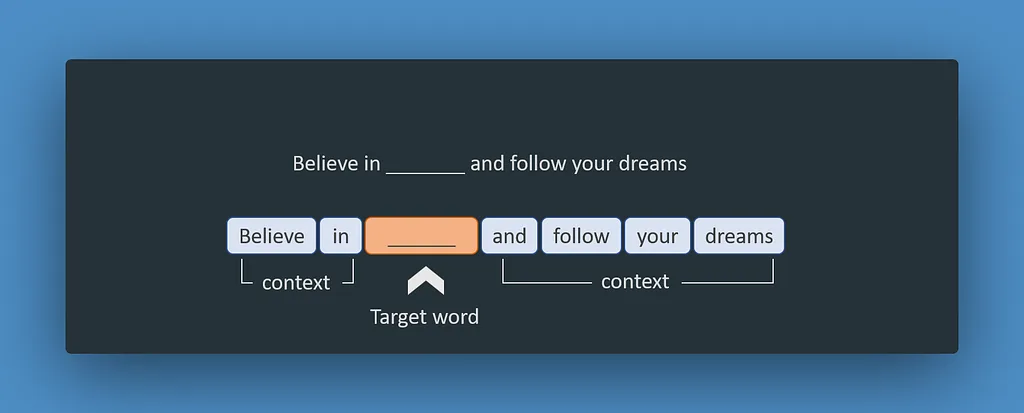
This unsupervised training method elegantly avoided the need for labeled data. The network simply predicted the next word across a huge text corpus, typically a Wikipedia dump, over and over, until something remarkable happened: the model built an inner representation of the text it was trained on.
That inner representation turned out to be highly versatile. It enabled autonomous document classification, spam detection, sentiment analysis and basic question answering. Many tools we use daily still rely on these models. But nobody, including me, would have thought back then that this would lead to some degree of intelligence.
Fast forward to 2017: Google researchers publish "Attention Is All You Need", introducing a novel architecture called the Transformer, which outperformed all previously known architectures on language tasks by a huge margin.
Transformers can assign different weights to each word in a sentence based on how it relates to the others. Words could suddenly be understood contextually. That gave neural networks a deep, contextual grasp of natural language, letting them distill large volumes of unstructured data into concise summaries, translate more accurately, and answer complex questions.
The race begins
Once the potential of these models became obvious, a fierce arms race began between a handful of organizations, all pushing the limits of the architecture. The strategy was singular: scale up the layer and parameter count to build ever larger language models.
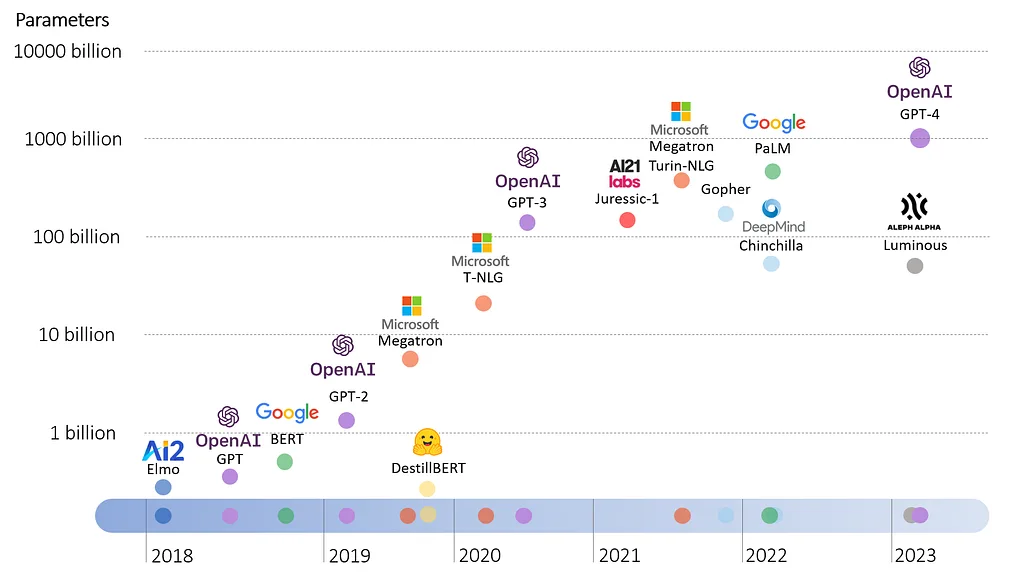
Training these huge models got very expensive. Luckily, cloud providers like AWS, Azure and GCP kept integrating more efficient and more powerful compute units into their servers, enabling ever bigger training runs. The race is still going, and it recently culminated in OpenAI's GPT-4, the largest known large language model in history, suspected to have over 1 trillion parameters.
Ok, but what actually is intelligence?
To answer whether GPT-4 is an artificial general intelligence, the Microsoft team first had to agree on a very general definition of intelligence. Helpfully, a group of 52 psychologists had already come up with one in 1994.
Intelligence is a very general mental capability that involves the ability to reason, plan, solve problems, think abstractly, comprehend complex ideas, learn quickly and to learn from experience.
The researchers argue that a model with all of these abilities should be called an artificial general intelligence.
Inner representation of the world
To put that to the test, the authors ran a variety of experiments. Let me highlight the ones that blew my mind.
In an early experiment they asked GPT-4 to draw a unicorn in TikZ, a script language for illustrations. It produced a visual representation of a unicorn despite never being trained on images. It could even modify the drawing when prompted, which implies GPT-4 holds a real internal concept of what a unicorn is.

They repeated this experiment at fairly regular intervals while GPT-4 was still being trained. The longer it trained, the better its unicorn got.
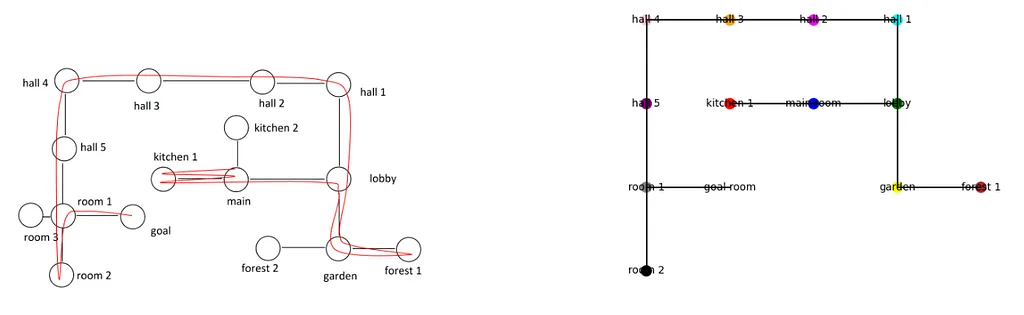
In another experiment, researchers played a text-based game with GPT-4, tasking it to explore an imaginary map of rooms through text prompts until it found the goal. When they then asked it to draw the map, GPT-4 accurately produced a visual representation of all the rooms it had visited. The researchers claim this version of GPT-4 had only been trained on text, which makes the result even more outstanding.
Is GPT-4 an AGI?
The authors argue that GPT-4 has capabilities in all the mentioned dimensions except planning. Planning is something GPT-4 is exceptionally bad at. And since GPT-4 is frozen in time and never updates its parameters, it also can't learn from past experience, although that is more of a policy constraint than a limitation of the model itself.
Besides this major shortcoming, GPT-4 excels at almost all other dimensions. So the researchers argue GPT-4 should be called an artificial general intelligence. Maybe not the most sophisticated one, but by their definition the first ever created.
As exciting as GPT-4's arrival is, it's still just a snapshot in time. You can assume other organizations are training even more capable models right now.
There is also a lot of room for improvement left in the transformer architecture itself. But given the massive amounts of compute and data it took to reach this level, I suspect the next big leap will come from a change in architecture.
What does that mean for the future?
Surprisingly, the key to intelligence seems to depend purely on the sheer number of somewhat-connected dynamic parameters. Once we reach models with 10 trillion parameters or more, we have to expect they will eventually become more intelligent than any human who ever lived. At the current speed of development, the AI industry is clearly outpacing academia, and we still don't actually understand how these models "think" or why these capabilities emerge.
As scary as that sounds, sophisticated AGIs look a lot closer than many experts in the field suspected.
That also means there is a realistic threat of an uncontrolled AGI that could potentially harm all of humanity. Harnessing the positive impact of these models while mitigating the negative sides will take a lot of careful consideration and guiding rules.